
Baby, It's Cold Outside
By Brenna Fender
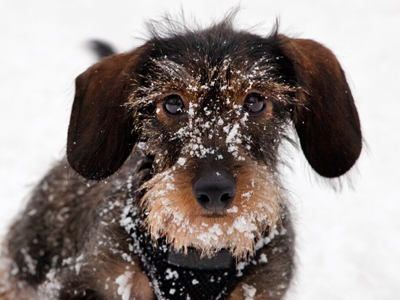 Right now, the news is all about the weather. Wet T-shirts freezing in under a minute. Hot water tossed into the air that turns to ice before it hits the ground. It’s really, really cold.
But you are still going to do agility.
Some of you will trial indoors in buildings that are heated, but are still pretty darn cold or that don't have enough crating space inside for all the dogs (so your dog will be outside in the car). Others will trial in unheated arenas. Those in states without a lot of snow will compete outside. How do you keep your dog running well under these circumstances?
Prepare Yourself
If you will be trialing out in the cold, train there too. If you frequently train in a heated building only to trial outside or in an unheated space, you might be surprised by increased speed (cold dogs often run faster!), throwing off your timing and possibly even leading to injury. Your dog might also behave differently upon landing on a very cold table as well! Train like you trial this winter.
Warm Up
Warm-ups are always important, but even more so in cold weather. Take extra time to warm your dog’s muscles (and yours). Consider doing some jogging before hitting the warm-up jump. Your dog can wear a non-restrictive coat while warming up and you can put it right back on at the end of the run and then cool him down.
Down Time
If you're crating in your vehicle or another unheated space, cover your crate and take care to block drafts that may creep in around the bottom where your dog will be resting. Space blankets with the reflective side facing toward the dog are a good way to help keep warm air in the crate and cold air out.
Layer dog coats for additional warmth. For example, you might have a nonrestrictive coat for the dog to wear when you're getting him ready to run, but then a bulkier and warmer coat to put over the top of it.
Self-warming crate pads like those carried at Clean Run have a special interior lining that's similar to a space blanket. The lining captures your dog's body heat and radiates that heat back to him while he's lying on the mat. Some dogs like blankets in their crates in the winter and will crawl under them for warmth.
If you have more than one dog and they like each other’s company, you might crate them together so they can benefit from increased body heat.
In very cold weather, avoid using metal water bowls in your crate. Metal is a conductor and the water will get cold quickly and possibly freeze.
Protect Paws
Frequently check paws for cold-weather-related damage. Ice balls may form in the hair between pads, which may crack and bleed. Dogs with sensitive feet may need to wear boots when going outside at home to avoid damage that will affect their performance at trials. A wax-based paw protector might be helpful for dogs that don’t wear boots.
Also be aware that your dog may pick up chemicals or other dangerous substances from walking near snowy roads, so wiping down feet and other snow-dampened areas might help with overall safety.
Be Aware of Frostbite
Hopefully, you won’t be trialing and training outdoors under conditions that might cause frostbite, but dogs have to go outside in all sorts of weather on a daily basis, so be aware of this potential danger. Watch extremities, including ears, paws, and noses, for alterations in color that might indicate frostbite. Call your veterinarian immediately to determine the best frostbite treatment (better yet, if you think your dog might be a candidate for frostbite, discuss prevention and possible treatment with your vet before it happens).
When is it Too Cold?
If your dog is shivering and refusing to work, it’s probably just too cold. Trade your potential Q for a comfortable sofa and dreams of a warmer day!
For general cold weather pet care information, visit the American Veterinary Medical Association’s site at https://www.avma.org/public/PetCare/Pages/Cold-weather-pet-safety.aspx.
Recently Viewed Products